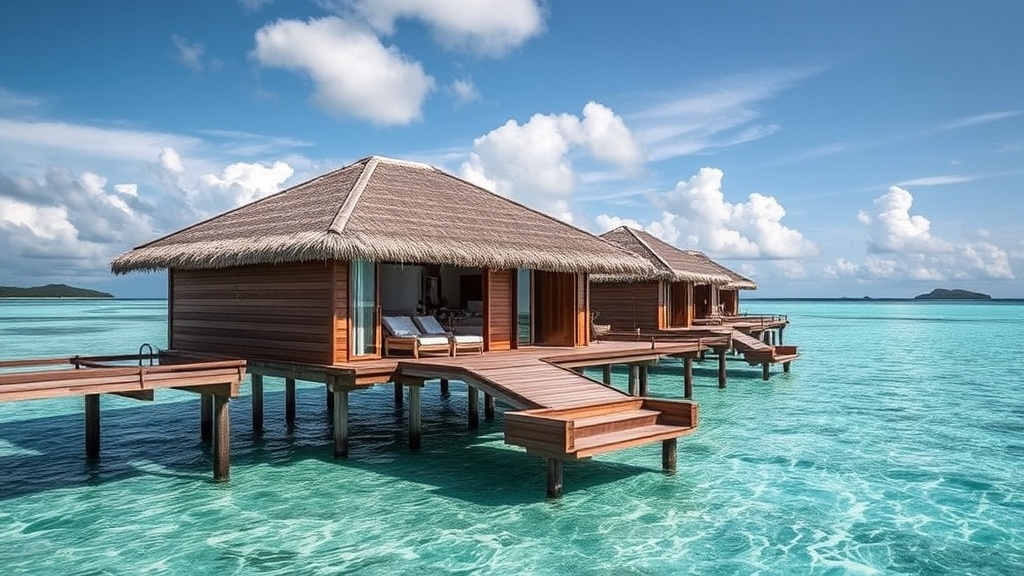
Calculating the Real Cost of Luxury: Is That Overwater Bungalow Worth the Spend?

Imagine you're staring at a booking screen for a high-end resort in the Maldives or Bora Bora. The price tag for the overwater villa is nearly double the standard beachfront room, yet the view is a single pane of glass over turquoise water. You've spent months planning this trip, and now you're staring at a spreadsheet that doesn't quite make sense. Is the premium a smart investment in your mental well-being, or is it a sunk cost that yields a poor return on your relaxation? This post breaks down the actual value proposition of high-end water villas so you can decide if the line item is justified.
When we talk about high-end travel, we aren't just talking about the room rate. We're talking about the total cost of ownership—or in this case, the total cost of the experience. A luxury villa isn't just a bed; it's a localized ecosystem of services, privacy, and specific access. Before you click "confirm," you need to audit what you're actually paying for beyond the aesthetic allure of the Instagram photo.
Does the higher price tag actually buy more privacy?
This is the most frequent question I get from clients. The short answer? Not always. While a water villa offers a sense of isolation, you're often living in a high-density cluster of similar structures. If your goal is absolute solitude, a remote land-based villa might actually be a better bet.
In many luxury resorts, the "privacy" of an overwater bungalow is a relative term. You might have a direct view into your neighbor's deck through your glass floor or side window. If you're paying a 40% premium for a water villa, you're paying for the ability to step directly from your deck into the ocean. If you're a person who values physical boundaries and quiet, check the resort's layout maps. A single, detached villa on a larger land plot often provides more actual silence than a row of interconnected water villas.
Consider these three factors when weighing the privacy ROI:
- Density: How many villas are in a single line? More villas mean more noise from footsteps on wooden boardwalks.
- Access: Is the villa at the end of a long jetty? The end units are almost always quieter and more private.
- Visual Privacy: Does the villa have high enough side rails? A low railing means people walking the main path can see right into your living space.
Is a water villa worth it for a short stay?
If you only have four days for your entire vacation, the math changes. If you spend those four days in an overwater villa, you're spending a significant portion of your budget on a single room type. From a project management perspective, this is an efficiency problem. If you're in a rush, the time spent traveling to and from the resort via boat or seaplane might eat into your actual relaxation time.
I suggest a "Split Stay" strategy for shorter durations. Spend the first two nights in a standard beachfront room to keep your baseline costs manageable, then move to the overwater villa for the final two nights. This allows you to test the luxury without committing your entire travel budget to a single room type. You get the best of both worlds: the stability of the land and the novelty of the water, all while optimizing your spend.
To see how different climates affect the longevity of these structures and their impact on travel-related costs, you can check out the latest environmental reports from UNESCO regarding coastal management and tourism-heavy regions. It's a good way to see how these destinations are managing the footprint of luxury development.
How much is the "Experience Premium" actually costing you?
Let's look at the hard numbers. In many high-end resorts, the price of the room is just the entry fee. Once you're in the water villa, the "lifestyle creep" of the vacation begins. Because you are physically separated from the main resort buildings, you become more reliant on resort services for everything.
The Hidden Costs of Water Villas:
| Expense Category | Standard Room Impact | Water Villa Impact |
|---|---|---|
| Food & Beverage | Easy walk to bar/restaurant. | Often requires room service or boat transfers. |
| Transportation | Walking distance to amenities. | May require a buggy or long walk on jetties. |
| Activity Access | Direct access to beach/pool. | Direct access to ocean, but limited by weather. |
If you're a person who likes to wander and explore local towns or nearby beaches, a water villa might actually trap you. You'll be more likely to order a $25 cocktail to your deck than walk to the beach bar. This is a psychological trap. The more comfortable and isolated you are, the more you'll spend on internal resort amenities.
Before you decide, look at the Condé Nast Traveler reviews specifically for the "vibe" of the room. Does the feedback mention noise from the boardwalks? Does it mention the difficulty of getting food delivered? These are the small details that determine if your high-end booking becomes a source of frustration rather than relaxation.
If you value the ability to jump into the water at any time, the ROI is high. If you value being able to walk into a local village for a cheap lunch, the ROI is low. A water villa is a specialized tool. It's designed for one thing: immersion. If immersion is your goal, pay the premium. If exploration is your goal, keep your feet on the sand.