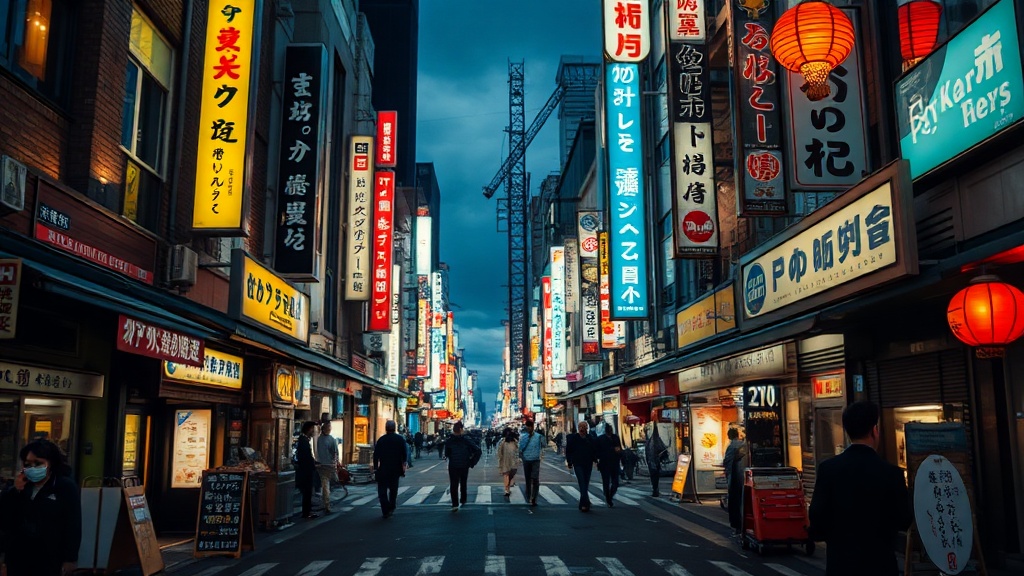
Finding Quiet in the Chaos of Tokyo

What You Will Learn from This Guide
This post provides a strategic framework for navigating Tokyo, Japan, specifically for travelers who want to experience the city's high-density energy without succumbing to sensory overload. You will learn how to identify "quiet zones," how to optimize your transit logistics to avoid peak congestion, and how to select accommodations that offer a genuine psychological retreat from the neon-lit chaos. This is not a guide to the most popular tourist landmarks, but a tactical manual for finding high-value stillness in one of the world's most populous metropolitan areas.
The Paradox of Tokyo: High Density vs. High Order
Tokyo is a city of extreme contrasts. On one hand, you have the crushing density of Shinjuku Station or the Shibuya Scramble; on the other, you have a culture rooted in omotenashi (hospitality) and a profound respect for shared space. For the professional traveler, the "chaos" of Tokyo is rarely about disorder—it is about the sheer volume of stimuli. To find quiet, you do not look for a lack of people; you look for areas with optimized social etiquette and intentional design.
From a project management perspective, think of Tokyo as a highly efficient system with massive throughput. To find "quiet," you must identify the nodes in the system where the throughput is intentionally throttled or redirected. This usually occurs in residential pockets, temple precincts, and specialized hospitality venues.
Strategic Neighborhood Selection for Tranquility
Your choice of home base dictates your baseline stress level. While staying in Shinjuku or Shibuya puts you in the heart of the action, it also subjects you to constant noise and light pollution. If your goal is restorative travel, consider these three specific areas:
- Daikanyama: Often referred to as the "Brooklyn of Tokyo," this area is upscale, sophisticated, and significantly quieter than its neighbors. It is home to the T-Site Daikanyama TSUTAYA Books, a premier example of a "quiet" commercial space designed for lingering and contemplation.
- Yanaka: Located in the Taito ward, this area survived much of the wartime destruction of Tokyo, preserving a "Shitamachi" (old town) atmosphere. The streets are narrow, the pace is slower, and the architecture is much more human-scale.
- Kichijoji: A favorite among locals, this neighborhood offers a perfect balance of high-end amenities and proximity to Inokashira Park. It provides a much more relaxed rhythm than the central business districts.
The ROI of High-End Hotel Design
When booking, do not just look at the star rating. Look at the acoustic engineering and the "buffer zones" of the hotel. In Tokyo, a premium price tag often pays for silence. A hotel with a dedicated lounge or a high-floor policy is worth the investment because it provides a controlled environment to reset your nervous system. If you are planning a trip around a specific seasonal event, ensure you review the Easter 2026 Travel ROI Getaway Guide to understand how seasonal spikes in tourism might affect the availability and price of these quieter, premium properties.
Tactical Transit: Avoiding the Rush
The most significant source of "chaos" in Tokyo is the transit system during peak hours. If you find yourself caught in the middle of the morning or evening rush, your energy reserves will deplete rapidly. To maintain your mental bandwidth, follow these three rules of engagement:
- The 10-to-4 Rule: Aim to move between major districts between 10:00 AM and 4:00 PM. This avoids the 7:30–9:00 AM commuter surge and the 5:30–7:30 PM post-work exodus.
- The "Green Car" Strategy: If you are taking longer-distance lines or the Shinkansen, always pay the premium for a "Green Car" (First Class). The cost-to-benefit ratio is exceptionally high; you are paying for physical space and a significant reduction in decibel levels.
- Use Google Maps for Real-Time Congestion: Google Maps provides highly accurate data on train congestion. If a line is marked as "crowded," do not attempt to use it unless absolutely necessary. Find an alternative route or wait 30 minutes at a cafe.
Finding Quiet in Public Spaces
Even in the middle of a metropolis, Tokyo has engineered pockets of silence. These are not accidents; they are intentional architectural choices. To find them, look for the following:
The Power of Temple Precincts
While Senso-ji in Asakusa is a major tourist draw and will be loud, smaller temples like those in the Nezu Shrine area offer much more substantial quiet. The key is to move beyond the main gate. Once you move into the inner sanctums or the surrounding wooded areas, the ambient noise of the city drops significantly. The physical act of walking through a torii gate acts as a psychological threshold, signaling a transition from the chaotic to the contemplative.
Curated Commercial Spaces
Tokyo has mastered the "third space"—places that are neither home nor work, but are designed for high-quality downtime. Instead of searching for a standard coffee shop, look for Kissatens (traditional Japanese coffee shops). These establishments often have strict unwritten rules about noise and conversation. A Kissatens like those found in the Ginza or Jimbocho districts will offer a much more controlled, quiet environment than a modern Starbucks.
"In a city of 14 million people, silence is not the absence of sound, but the presence of intentionality."
The Logistics of Sensory Management
As a strategist, I recommend treating your sensory input as a resource that must be managed. You cannot control the city, but you can control your interface with it. I recommend the following "kit" for any Tokyo excursion:
- Noise-Canceling Headphones: This is the single most important piece of equipment. Whether you are on a crowded subway or walking through a busy district like Akihabara, high-quality active noise cancellation (ANC) is non-negotiable.
- High-Quality Eye Mask: For your hotel stays, especially if you are staying in a central district. Even with blackout curtains, the light pollution in Tokyo is intense.
- A Physical Planner or Notebook: Digital notifications are part of the "chaos." Using a physical notebook to document your observations or plan your next move helps ground you in the present moment.
Practical Implementation: A Sample "Quiet Day" Itinerary
To demonstrate how to apply these principles, here is a sample itinerary for a day focused on low-stimulation, high-reward experiences:
09:00 AM: Slow breakfast at your hotel or a local Kissaten. Avoid the breakfast rush at major stations.
11:00 AM: Walk through the Meiji Jingu forest. The wide gravel paths and the dense canopy of trees act as a natural sound buffer from the Harajuku district just outside the gates.
01:00 PM: Lunch in a quiet side street in Omotesando. Look for restaurants with single-seat counters (counter seating), which are designed for solo, quiet dining.
03:00 PM: Visit the Nezu Museum. The museum itself is world-class, but the real value is the private garden located behind the building. It is an oasis of extreme stillness.
06:00 PM: Return to your hotel before the evening rush. Enjoy a high-quality meal via room service or a quiet, high-end restaurant in your residential neighborhood.
Final Assessment: Is the "Quiet Tokyo" Approach Worth It?
The ROI on planning for quiet in Tokyo is high. If you approach the city with a "see everything" mindset, you will likely end your trip feeling depleted and overstimulated. If you approach it with a "managed stimulus" mindset, you will find that the city's efficiency actually works in your favor, allowing you to experience deep culture without the burnout.
The goal is not to avoid Tokyo, but to engage with it on your own terms. By selecting the right neighborhoods, timing your movements, and investing in the right tools, you turn a potentially overwhelming metropolitan experience into a structured, restorative journey.