Hidden Gems of Portugal: A Complete Guide to Off-the-Beaten-Path Adventures

This post maps out Portugal's most rewarding under-the-radar destinations—think medieval villages clinging to granite cliffs, wine regions where you're the only foreign face, and Atlantic beaches without a single umbrella rental. You'll get honest cost breakdowns (no "budget-friendly" vagueness), specific logistics for reaching places Google Maps struggles with, and a reality check on which "hidden gems" have become Instagram traps worth skipping. For established professionals who've earned their vacation time and want to spend it wisely.
What are Portugal's most underrated destinations beyond Lisbon and Porto?
The Alentejo region, the Schist Villages (Aldeias do Xisto), and the northeastern Trás-os-Montes deliver authentic experiences without the cruise ship crowds. These aren't marketing buzzwords—they're actual places where daily life continues unchanged by tourism boards.
The Alentejo stretches from the Spanish border to the Atlantic, covering nearly one-third of Portugal with only 5% of its population. Rolling wheat fields dotted with cork oak groves give way to fortified towns like Monsaraz and Marvão—the latter perched 850 meters above sea level with views across Extremadura. Accommodation runs the gamut from converted manor houses (quintas) to working farm stays.
The Schist Villages network comprises 27 mountain communities built from local slate-colored stone. Talasnal, Cerdeira, and Ferraria de São João sit within an hour of Coimbra yet feel decades removed. These aren't theme parks—locals actually live here. Some villages offer restored stone cottages through the official network; others remain strictly residential. Worth noting: winter access requires chains or a capable vehicle.
Trás-os-Montes ("Behind the Mountains") in the far northeast remains Portugal's most isolated region. The Miranda do Douro plateau—home to the pre-Roman Pauliteiros de Miranda dancers—and the medieval town of Bragança see fewer visitors in a year than Sintra sees in a March weekend. The trade-off? Limited public transport and minimal English signage.
How much does a two-week off-the-beaten-path Portugal trip actually cost?
Budget €2,800–€4,200 per person for a quality two-week experience excluding flights—roughly 30% less than equivalent comfort levels in Lisbon or the Algarve.
Here's the thing about Portugal's interior: your money goes significantly further, but hidden costs emerge. Rental cars (non-negotiable for most rural regions) run €35–€55 daily for compact manual transmissions—automatics command premiums and sell out. Fuel in remote areas often exceeds metropolitan rates by €0.10–€0.15 per liter.
| Expense Category | Hidden Gems (Rural) | Tourist Hotspots (Lisbon/Algarve) |
|---|---|---|
| Boutique Accommodation (per night) | €75–€120 | €150–€280 |
| Traditional Dinner (wine included) | €18–€25 | €35–€55 |
| Rental Car (daily, compact) | €35–€50 | €45–€70 |
| Attraction Entry | €0–€5 (often free) | €15–€25 |
| Coffee + Pastry | €1.50–€2.50 | €4–€6 |
The catch? Rural accommodations book solid during harvest seasons (September–October for wine regions, March–April for almond blossoms). Last-minute planners find themselves driving 45 minutes to the nearest available room. Lock in reservations 60–90 days ahead.
One cost advantage nobody talks about: tipping culture barely exists outside tourist zones. Rounding up to the nearest euro satisfies everywhere except upscale restaurants in major cities. That 20% American standard? Keep it—you're not in Miami.
When is the best time to visit Portugal's hidden regions without the tourist crowds?
Late September through mid-October delivers ideal conditions—harvest activity, swimming-weather temperatures, and accommodation availability at shoulder-season rates.
Spring (April–May) competes closely. Wildflowers carpet the Alentejo plains, and river valleys run green rather than burnt gold. The Official Turismo de Portugal site lists regional festivals that transform quiet villages—Festa das Cruzes in Barcelos (May), Festa de São João in Miranda do Douro (late June)—though book well ahead if attending.
That said, summer (July–August) in Portugal's interior isn't a vacation; it's survival training. Temperatures regularly exceed 40°C (104°F) in the Alentejo. Small villages shutter entirely as locals flee to the coast. Swimming pools become mandatory rather than optional amenities.
Winter offers a different proposition. The Schist Villages running programming around Christmas markets and chestnut roasting. Trás-os-Montes sees snow—unusual for Portugal—and thermal springs at Chaves and Monfortinho feel transcendent when outside temperatures drop. Just verify heating systems before booking rural accommodations; Portuguese stone houses hold cold like caves.
What practical challenges should you expect when traveling rural Portugal?
Road signage assumes local knowledge, restaurant hours follow no predictable pattern, and English proficiency drops precipitously outside the top five cities.
Driving presents the steepest learning curve. Portugal's IP (itinerário principal) and IC (itinerário complementar) highways work fine, but the estradas nacionais winding through mountain villages—often the only access—narrow to single lanes with stone walls on both sides. GPS frequently suggests routes impassable for standard vehicles. Download offline maps (MAPS.ME works better than Google for rural Portugal) and verify routes with accommodation hosts.
Dining requires strategy. Many family restaurants operate lunch-only (12:00–15:00) or dinner-only (19:30–22:00) with no middle ground. The €12 three-course prato do dia (daily special) represents Portugal's best food value—soup, main, dessert, wine, and coffee included—but disappears once service ends. Carry snacks. Rural gas stations often close Sundays and lunch hours (12:30–14:00).
The language barrier isn't insurmountable—it's inconsistent. Younger Portuguese generally speak English; older residents in isolated regions may not. A translation app (Google Translate's offline Portuguese pack) plus basic courtesy phrases (obrigado/obrigada, por favor, não falo Português) covers most situations. Worth noting: attempting Portuguese, however butchered, generates more goodwill than defaulting to English immediately.
Which specific villages and natural areas deserve your limited vacation time?
Prioritize Sortelha, Piódão, the Serra da Estrela highlands, and the Vincentian Coast (Costa Vicentina) for experiences unavailable elsewhere.
Sortelha ranks among Portugal's twelve official Historical Villages, yet receives a fraction of Óbidos's traffic. The 13th-century castle remains intact, the streets are genuinely medieval (wear sensible shoes), and the population hovers around 300. Stay at Casa da Cidadela—converted medieval houses with modern bathrooms and ancient stone walls. Two nights maximum; beyond that, you'll have seen everything twice.
Piódão in the Arganil municipality resembles something from a fantasy novel: schist houses climbing a mountainside valley, blue-framed windows reflecting local shale rather than paint. The road in demands attention—hairpin switchbacks, occasional livestock—but the payoff justifies the white knuckles. The Casa das Oliveiras guesthouse provides parking (rare here) and balconies overlooking the village cascade.
The Serra da Estrela—mainland Portugal's highest point at 1,993 meters—offers hiking trails without the Alpine infrastructure. The Vale Glaciar (Glacial Valley) trail near Manteigas provides accessible mountain scenery; harder routes reach actual glacial lakes. Queijo da Serra—the region's unpasteurized sheep's milk cheese—justifies the entire detour. Purchase from producers directly; supermarket versions pasteurize the character away.
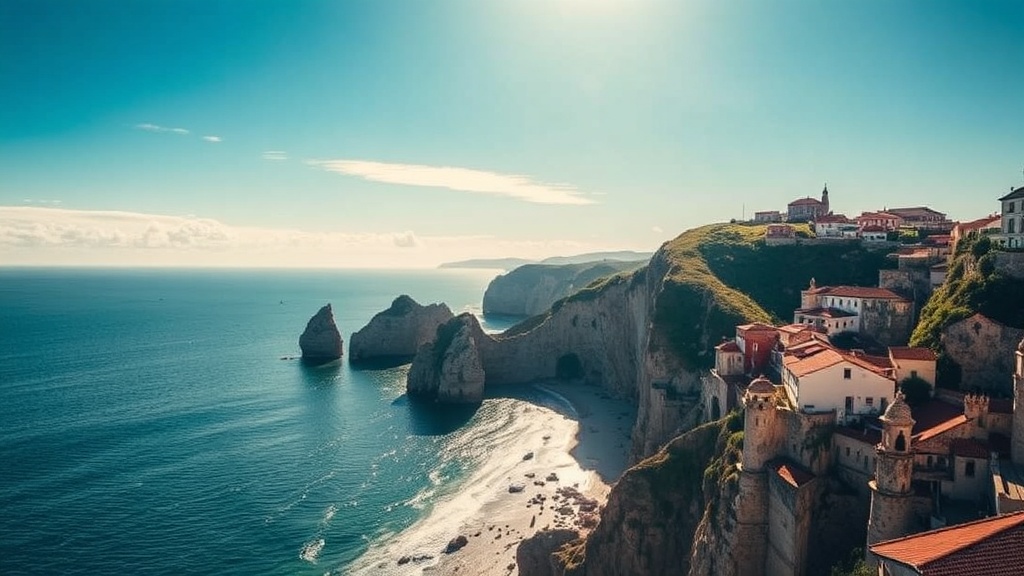
The Costa Vicentina Natural Park protects 110 kilometers of Atlantic coastline between Sines and Sagres. Unlike the Algarve's developed beaches, these remain wild—clifftop walking trails, coves accessible only by foot, and surf breaks without rental shacks. Odeceixe and Carrapateira offer accommodation; Praia da Amália and Praia do Tonel provide solitude. The water's colder than the Algarve. Much colder.
How do you structure an itinerary that actually works?
Limit geography—no more than two regions in fourteen days—and alternate mountain/plateau destinations with coastal recovery time.
A proven route: three nights Lisbon (arrival/decompression), four nights Alentejo base (Évora or Monsaraz for day trips to wineries and villages), three nights Schist Villages (split between two villages), four nights Costa Vicentina (hiking and Atlantic recovery). Total driving: manageable. Total stress: minimal.
Here's the thing about Portuguese driving times—they lie. Google Maps might claim 90 minutes between destinations; reality includes narrow roads, agricultural traffic, and the occasional flock of sheep. Build in 25% buffer time. Nothing ruins a vacation like arriving at a castle five minutes after last entry.
Consider the Pass Portugal program for heritage site access if your itinerary includes multiple monuments—though rural hidden gems often charge nothing. The math usually favors pay-as-you-go for off-path travelers.
One final note on connectivity: many rural accommodations advertise "WiFi" that barely loads email. If work emergencies demand reliable internet, confirm specifically about bandwidth and backup options. Stone walls block mobile signals beautifully. Some travelers find this liberating. Others panic. Know which category you fall into before booking that remote quinta with the infinity pool and the romantic isolation.
Portugal's interior rewards preparation, realistic expectations, and a willingness to embrace slower rhythms. The spreadsheets can stay home—but maybe keep one tab open for those restaurant hours.