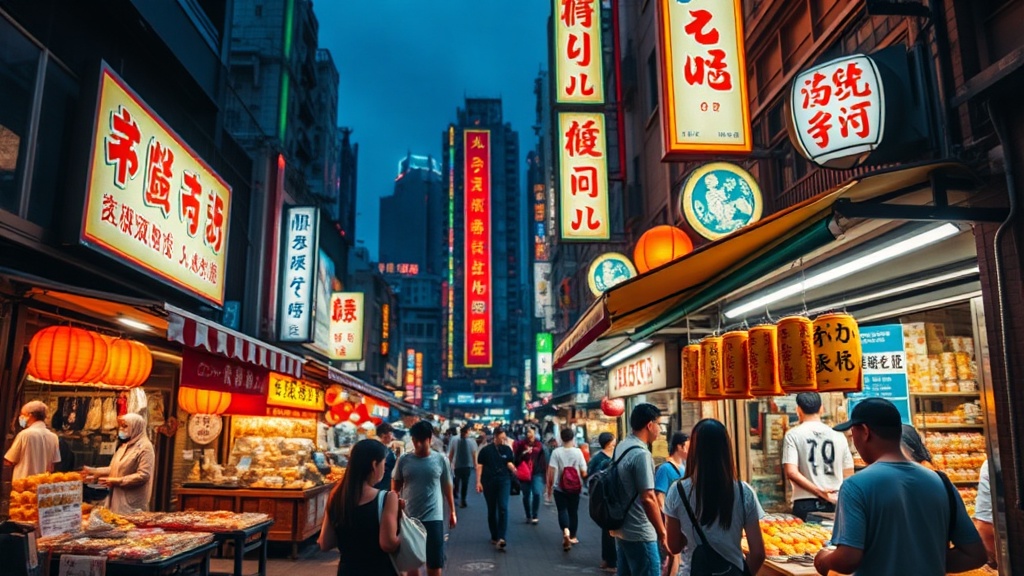
Navigating the Night Markets of Taipei

The Myth of the "Tourist Trap" Night Market
Most travelers assume that Taipei’s night markets are overpriced, overcrowded spectacles designed primarily for tourists. This misconception leads high-value travelers to skip these essential cultural touchstones in favor of more "refined" dining experiences. In reality, the night markets of Taipei are highly efficient, high-output culinary ecosystems. If you approach them with the right logistics—understanding the timing, the payment methods, and the specific vendor hierarchies—they offer some of the highest ROI (Return on Investment) dining experiences in Asia. This guide provides a strategic breakdown of how to navigate the major markets, what to prioritize, and how to manage your time and budget effectively.
Strategic Overview of Major Markets
Not all night markets are created equal. Depending on whether your goal is culinary experimentation, souvenir shopping, or a more controlled environment, you should select your target based on its specific profile. I categorize the three primary markets into three distinct tiers: the Heavyweight, the Specialist, and the Traditionalist.
Shilin Night Market: The Heavyweight
Shilin is the largest and most famous, which also makes it the most chaotic. From a logistical standpoint, it is the easiest to access via the Red Line of the MRT, but it carries a "tourist premium" on certain items. Use Shilin if you want the full sensory overload and a wide variety of non-food items, but do not expect a quiet or intimate experience. It is high-volume and high-energy.
Raohe Street Night Market: The Specialist
Raohe is a single, long street rather than a sprawling complex. This linear layout makes navigation much more predictable. It is highly efficient for those who want to move in one direction and hit specific high-quality stalls. It is widely considered to have a higher density of "must-eat" legendary stalls compared to the more fragmented Shilin. If you are short on time, Raohe is your most efficient option.
Ningxia Night Market: The Traditionalist
Ningxia is smaller and more focused on food than retail. It lacks the massive scale of Shilin but offers a higher concentration of traditional, high-quality Taiwanese cuisine. For the professional traveler who wants to maximize culinary quality while minimizing the time spent navigating massive crowds, Ningxia is the superior choice. It is a concentrated burst of high-density flavor.
The Essential Food Checklist: High ROI Items
To avoid wasting time on mediocre snacks, focus on these specific, culturally significant items. These are the "anchor" dishes that define the Taipei street food experience.
- Oyster Omelet (O-a-chien): A staple that combines chewy starch, fresh oysters, and a savory sauce. Look for vendors with high turnover to ensure the seafood is fresh.
- Pepper Bun (Hu Jiao Bing): Specifically at Raohe, look for the stall with the traditional clay oven. The crust should be crispy and slightly charred, with a juicy, peppery meat filling.
- Braised Pork Rice (Lu Rou Fan): This is the ultimate comfort food. It is a low-cost, high-reward dish consisting of minced pork belly in a savory soy-based gravy over rice.
- Stinky Tofu: This is a polarizing item. If you are willing to take the risk, look for the fermented, deep-fried version. The ROI here is cultural immersion, even if the scent is intense.
- Beef Noodle Soup: While often found in dedicated shops, many high-end night market stalls serve a version that is incredibly rich and deeply flavorful.
Logistics and Operational Efficiency
Navigating a night market requires more than just an appetite; it requires a tactical plan. To avoid the common pitfalls of crowd fatigue and wasted currency, follow these operational rules.
The Cash and Payment Reality
Despite Taiwan's advanced technological infrastructure, the night market is still a cash-heavy environment. While some larger, more modern stalls may accept EasyCard (the standard transit card used for MRT and convenience stores), most small vendors only accept New Taiwan Dollars (TWD). Actionable Step: Carry a dedicated "market wallet" with small denominations. Attempting to pay for a $100 TWD snack with a $1,000 TWD note will slow down the line and frustrate both you and the vendor.
Timing Your Arrival
The "peak" hours for night markets are generally between 7:00 PM and 9:00 PM. If you want to avoid the most aggressive crowds and ensure you can actually find a place to stand while eating, aim for an "early strike" around 6:00 PM or a "late strike" after 10:00 PM. Arriving at 6:30 PM allows you to secure your favorite stalls before the massive influx of locals and tour groups. This is particularly important if you are traveling with a group or want to avoid the physical stress of navigating shoulder-to-shoulder crowds.
The "Standing Room" Protocol
In a high-density market, you will rarely find a table. Most people eat while standing. Do not feel obligated to find a seat; it is a massive time-sink. Instead, look for "standing zones" near the vendors. If you see a crowd, it is usually a sign of high turnover and fresh food. If a stall has a very long, slow-moving line, evaluate the menu. If the item isn't a legendary staple, move to the next stall to preserve your time.
The Cost-Benefit Analysis of Overwater vs. Street Food
A common question I receive from clients planning luxury stays in Asia is whether it is worth "downgrading" to street food when they have access to high-end dining. My professional take: It is not an "either/or" decision; it is a "both/and" strategy. A high-end hotel stay provides the necessary recovery and comfort, but the night market provides the cultural ROI. You should treat the night market as a high-intensity, short-duration culinary excursion, not a replacement for a structured dinner. Use the night market to experience the "soul" of the city, then return to your hotel to decompress.
Practical Tips for Success
- Use Wet Wipes: Street food is inherently messy. Many stalls provide them, but carrying your own high-quality, heavy-duty wet wipes is a non-negotiable for maintaining hygiene.
- The EasyCard Advantage: If you are staying in Taipei for more than two days, buy an EasyCard immediately at a 7-Eleven or a convenience store. It works for the MRT, buses, and many smaller vendors, making your transitions between markets seamless.
- Hydration Management: The heat and humidity, combined with salty, savory foods, can lead to rapid dehydration. Do not rely solely on soda or tea; purchase bottled water or electrolyte drinks from a nearby convenience store before entering the market.
- Watch Your Belongings: While Taipei is incredibly safe, the density of the crowds in markets like Shilin makes you a target for pickpockets. Wear a front-facing crossbody bag and keep your phone and wallet in secure, zipped pockets.
By treating the night markets as a logistical challenge to be solved rather than a chaotic event to be endured, you transform a potentially stressful experience into a highly efficient and rewarding cultural deep-dive. Plan your market, pack your cash, and focus on the high-ROI staples. Your time in Taipei will be significantly more productive.