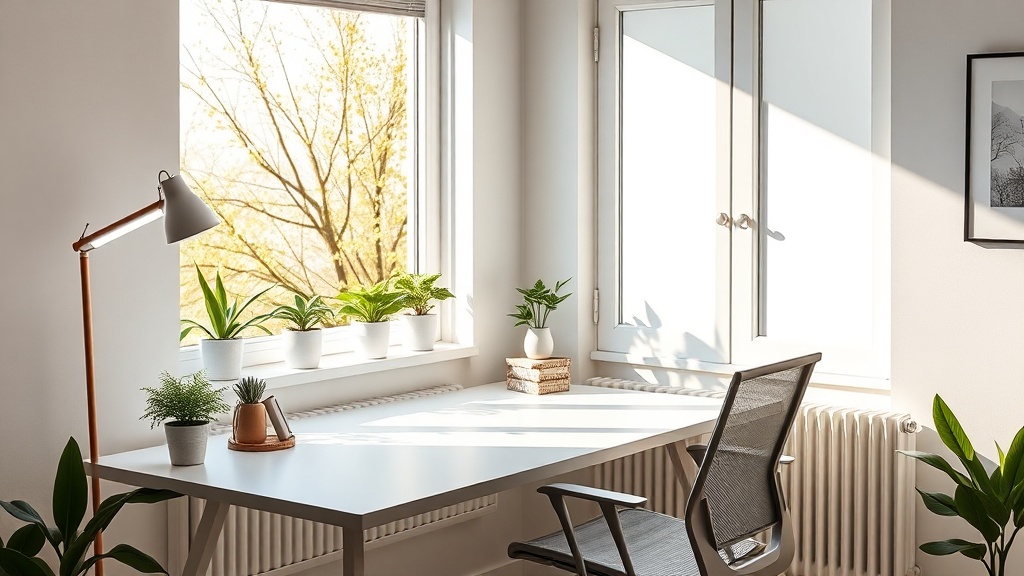
Spring Home Office Reset: Align Your Space with Your Circadian Rhythm

Why does syncing my workspace with my circadian rhythm matter?
Our bodies run on a 24‑hour internal clock that regulates sleep, hormone release, and alertness. Harvard Health explains that exposure to natural light in the morning kick‑starts cortisol, sharpening focus, while dimmer evenings trigger melatonin for restorative rest. When your home office mirrors these light cues, you’ll notice steadier energy, fewer midday crashes, and a clearer mind for strategic travel planning.
How should I position my desk to capture optimal daylight?
Start by placing your primary screen perpendicular to the window rather than directly facing it. This reduces glare while still soaking up indirect morning light. If possible, set the desk near a south‑facing window (or north in the Southern Hemisphere) so you get the brightest light after the spring‑time clock change.
- Measure the window’s height; keep the top of your monitor at or just below eye level to avoid neck strain.
- Use a circadian‑aligned lighting guide to fine‑tune brightness throughout the day.
- During overcast days, supplement with tunable LEDs (see next section).
Which tunable LED lights give the best circadian boost?
LED panels that adjust color temperature from cool 6500K (morning) to warm 2700K (evening) emulate the sun’s spectrum. Brands like Philips Hue and LIFX offer app‑controlled schedules. Set a morning boost of 5000‑6500K for 30‑45 minutes after you start work, then shift to 4000K mid‑day, and finally to 2700K an hour before you plan to log off.
What plants should I add for focus and mood?
Research from NASA’s Clean Air Study shows that certain foliage can reduce stress hormones and improve concentration. Consider these low‑maintenance picks:
- Snake Plant (Sansevieria) – thrives in low light and filters benzene.
- Spider Plant (Chlorophytum comosum) – excellent at removing formaldehyde.
- Peace Lily (Spathiphyllum) – adds a pop of white and boosts humidity.
Place them on a side shelf or hanging planters to keep the desk surface clear.
How can I declutter my workspace for mental clarity?
A tidy desk mirrors a tidy mind. Follow these quick steps, inspired by my Digital Spring Cleaning series:
- Clear the top. Only essentials (monitor, keyboard, a notebook) stay visible.
- Sort cables. Use Velcro straps or a cable tray to hide power cords.
- Archive paperwork. Scan receipts and store them in a cloud folder labeled “Travel ROI”.
- Set a daily 5‑minute reset. At the end of each workday, return items to their home spots.
What’s the spring‑time checklist for a circadian‑aligned office?
- Desk perpendicular to a south‑facing window.
- Install tunable LED strips with a 6‑hour schedule.
- Add three NASA‑recommended plants.
- Swap heavy curtains for light, sheer shades to diffuse morning sun.
- Run a 5‑minute end‑of‑day desk reset.
Takeaway
By treating your home office like a mini‑project—mapping natural light, integrating smart lighting, greening the space, and enforcing a declutter routine—you’ll convert spring’s longer days into measurable productivity gains. Try one change this week, track your focus metrics in a simple spreadsheet, and watch your Return on Experience (ROE) climb.