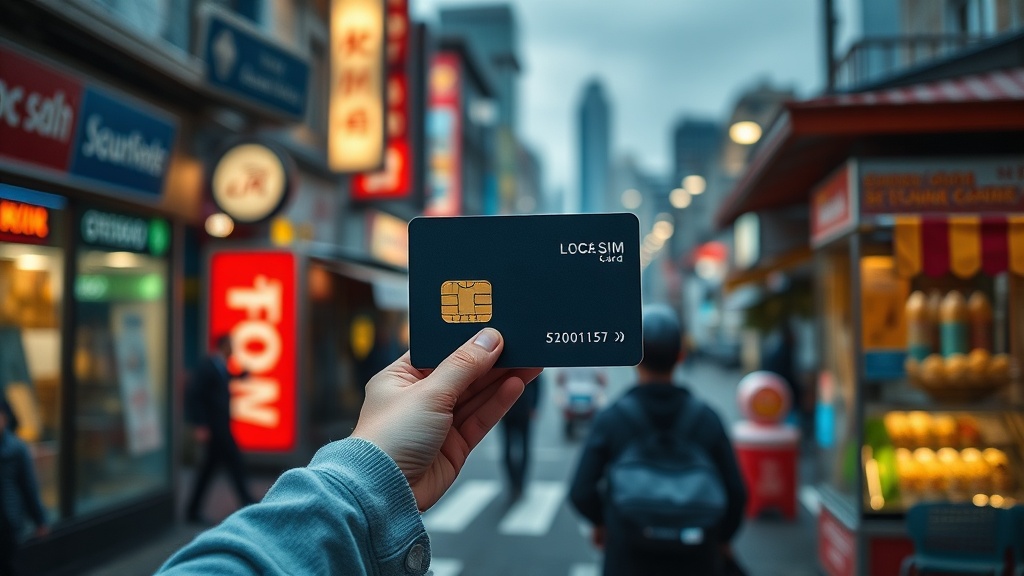
Why You Should Always Buy a Local SIM Card

Quick Tip
Buying a local SIM card or eSIM is much cheaper than paying daily international roaming fees from your home provider.
The High Cost of Staying Disconnected
A traveler stands at a train station in Tokyo, staring at a complex departure board. They need to check their platform number on Google Maps, but their international roaming is lagging, and the hotel Wi-Fi is nonexistent. The result is a missed connection and an expensive taxi ride to make up the time. This is the practical reality of poor connectivity: it isn't just an inconvenience; it is a drain on your time and your budget.
While international roaming packages from providers like Verizon or AT&T offer convenience, the ROI is often poor. You are frequently paying a premium for limited data buckets that disappear the moment you start using GPS or uploading photos. Buying a local SIM card or an eSIM is the most efficient way to ensure you have high-speed, reliable data without the "bill shock" at the end of your trip.
The Benefits of Local Connectivity
Switching to a local provider offers three distinct advantages for the organized traveler:
- Cost Efficiency: In many destinations, such as Thailand or Vietnam, you can purchase a high-capacity data plan (often 20GB or more) for under $15 USD. Comparing this to a $10-per-day international pass from a US carrier shows a significant cost saving.
- Reliability: Local SIMs connect to the strongest regional towers. If you are navigating through the hiking trails in the Swiss Alps, you want a connection that is optimized for that specific geography, not a roaming signal that is being routed back through a server in your home country.
- Real-Time Navigation: Relying on offline maps is a fallback, but having live data allows you to use real-time transit apps like Citymapper or Google Maps to track bus and train arrivals, which is essential for tight schedules.
Implementation Strategy: Physical SIM vs. eSIM
Before you depart, decide which hardware approach fits your device. If you have a newer smartphone (iPhone 11 or later, or recent Samsung Galaxy models), an eSIM is the gold standard. You can purchase and install a plan from providers like Airalo or Holafly before you even leave your house. This allows you to have data the second your plane touches the tarmac.
If you are using an older device or want the absolute lowest price, look for a physical SIM at the airport upon arrival. In many major hubs, such as Bangkok’s Suvarnabhumi Airport, kiosks for AIS or DTAC are ubiquitous and highly efficient. Keep your original SIM card in a secure, labeled pouch or a small dedicated travel wallet to avoid losing it when you return home.
Pro-Tip: Always check if your phone is "unlocked" before booking your flight. If your device is locked to a specific carrier, a local SIM card will not work, and you will be forced into expensive roaming plans.