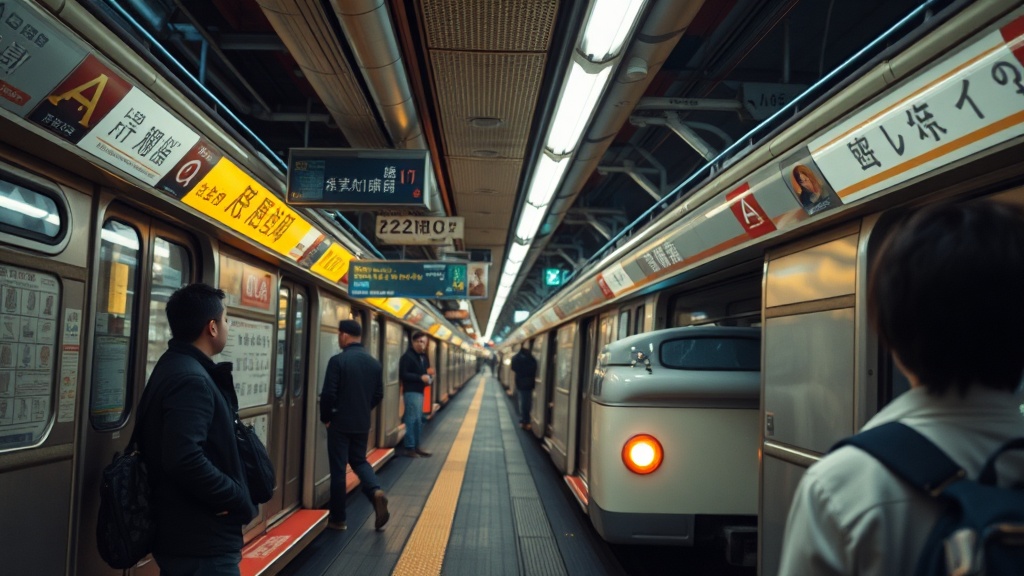
How to Use Public Transportation in Tokyo

A traveler stands at the entrance of Shinjuku Station, staring at a digital board flickering with dozens of different lines, colors, and destinations. They have a reservation for a high-end sushi dinner in Ginza in twenty minutes, but they cannot figure out if they need to follow the green line or the red line, or if they even need to change platforms entirely. This moment of paralysis is common in Tokyo. Navigating the world’s most complex transit system can feel like a high-stakes logic puzzle, but with the right technical approach, it is actually the most efficient way to move through the city. This guide provides the structural framework you need to navigate Tokyo’s trains, subways, and buses with the precision of a project manager.
The Hierarchy of Tokyo Transit
To navigate Tokyo, you must first understand that there is no single "subway" system. Instead, the network is a patchwork of different companies that operate independently. If you treat them as one monolithic entity, you will encounter friction during transfers and fare payments. Understanding these distinctions is the first step in optimizing your transit time.
JR East (Japan Railways)
The JR lines are primarily heavy rail lines that run above ground. The most critical line for any visitor is the Yamanote Line. This is a circular loop that connects Tokyo’s major hubs: Shibuya, Shinjuku, Tokyo Station, and Ueno. If your hotel is near a JR station, you can reach almost any major district by staying on this loop and transferring at key junctions. JR lines are excellent for long-distance travel and connecting to cities outside of Tokyo via the Shinkansen (bullet train).
Tokyo Metro and Toei Subway
These are the underground subway systems. The Tokyo Metro is the larger of the two, while Toei Subway is operated by the Tokyo Metropolitan Government. While they serve the same general purpose—moving people quickly through the city center—they are separate companies. This means a single ticket for a Tokyo Metro line may not cover a transfer to a Toei line without an additional fare or a specific type of transit card.
Private Railways
Companies like Keio, Odakyu, and Tokyu operate lines that often extend from central Tokyo into the western suburbs or towards tourist destinations like Hakone. These are highly efficient but operate on different fare structures than the JR or Metro lines. If you are planning a day trip to a specific outlying area, check which private rail line services that destination to avoid unnecessary transfers.
The Essential Tool: IC Cards and Digital Payments
Do not waste time purchasing individual paper tickets for every journey. The "cost-per-trip" overhead in terms of time and mental energy is too high. Instead, use an IC Card (Integrated Circuit Card). These are rechargeable, contactless smart cards that allow you to tap through gates instantly.
- Suica and Pasmo: These are the two primary brands. They are functionally identical and can be used interchangeably on almost all trains, subways, and buses in Tokyo.
- Digital Integration: If you have an iPhone, you can add a Suica or Pasmo card directly to your Apple Wallet. This is the gold standard for efficiency. You can top up the card using your Apple Pay with a credit card, meaning you never have to stand in line at a ticket machine.
- Physical Cards: If you prefer a physical card, be aware that there is currently a global semiconductor shortage affecting the availability of standard Suica/Pasmo cards. Look for the "Welcome Suica" or "Pasmo Passport," which are versions specifically designed for tourists and do not require a deposit.
- Usage Beyond Trains: An IC card is not just for rail. You can use it at vending machines, in most 7-Eleven or Lawson convenience stores, and even at many small cafes. This centralizes your spending and reduces the need to carry exact change.
To ensure you are always connected and can access digital maps or real-time transit updates, always buy a local SIM card or an eSIM before you arrive. Relying on hotel Wi-Fi to find your way through a station is a recipe for getting lost.
Strategic Navigation: Apps and Signage
The sheer volume of information in a station like Shibuya or Tokyo Station can be overwhelming. To manage this, you need to rely on specific digital tools and a systematic way of reading signs.
Google Maps vs. Navitime
Google Maps is highly reliable in Tokyo and provides excellent data on platform numbers and exit names. However, for more granular detail, the Japan Transit by Jorudan app or Navitime can provide more specific information regarding which car is closest to your intended transfer point. In a high-traffic station, knowing that you should be in "Car 4" to make a quick transfer can save you several minutes of sprinting through crowds.
The Exit Strategy
The biggest mistake travelers make is focusing on the train and forgetting the exit. A station like Shinjuku has hundreds of exits. If you exit through the "East Exit" when your destination is near the "West Exit," you could end up walking 15 minutes in the wrong direction through a crowded street.
The Protocol: Before you even board the train, look at the digital display inside the car or check your app to see which exit number is closest to your destination. Once you arrive at the station, look up at the yellow signs hanging from the ceiling. These signs will list the exit numbers and the landmarks they lead to. Follow the numbers, not just the general direction.
Etiquette and Efficiency: The Unspoken Rules
Tokyo's transit system functions with high efficiency because of the strict social contract among passengers. Violating these norms won't get you arrested, but it will make you stand out as an uninformed traveler and disrupt the flow of the commute.
- The Queue System: On most platforms, there are markings on the ground indicating exactly where the doors of the train will open. Passengers form neat lines at these marks. Do not attempt to board the train until the passengers have fully exited. Standing in the middle of the doorway is a major breach of etiquette.
- Silence is Mandatory: The train is a quiet zone. Talking on your mobile phone is considered extremely rude. If you must take a call, wait until you are on the platform or have exited the station. Keep your phone on silent mode and avoid loud conversations with travel companions.
- Backpack Management: In crowded cars, wearing a backpack on your back is an inconvenience to others. The standard practice is to hold your backpack in front of your chest or place it on the overhead luggage rack. This minimizes your physical footprint and prevents you from accidentally hitting others.
- Escalator Etiquette: In Tokyo, people generally stand on the left side of the escalator and walk on the right (though this can vary slightly depending on the specific line or station). Observe the people around you for a few seconds before deciding which side to stand on to avoid blocking the flow.
The Cost-Benefit Analysis of Taxis vs. Trains
As an established professional, your time is often your most valuable asset. You may be tempted to take a taxi when you are tired or running late. However, you must understand the ROI of a taxi in Tokyo.
Taxis in Tokyo are incredibly clean, professional, and safe, but they are expensive. A short 15-minute ride in a central district can easily cost 3,000 to 5,000 JPY. Furthermore, during peak hours or in heavy rain, traffic in areas like Roppongi or Ginza can be gridlocked, making a taxi significantly slower than the subway. Use taxis as a luxury or a last resort—for example, when traveling with heavy luggage or late at night when the trains have stopped running. For all other scenarios, the subway is faster, more predictable, and vastly more cost-effective.
Summary Checklist for Seamless Transit
To ensure your transit experience is optimized, follow this pre-departure checklist:
- Digital Prep: Ensure your Suica/Pasmo is loaded onto your phone or that you have a physical card ready.
- Route Verification: Check Google Maps or Navitime for the specific platform number and car position.
- Exit Identification: Note the specific exit number (e.g., "A1" or "West Exit") before leaving the train.
- Physical Awareness: Move your backpack to your front and silence your phone before entering the station.
By treating Tokyo's transit system as a logistical network rather than a chaotic maze, you reclaim your time and mental energy. This allows you to focus on the actual experience of the city rather than the stress of getting from point A to point B.
Steps
- 1
Get a Digital or Physical IC Card
- 2
Download a Transit Navigation App
- 3
Identify Your Station and Exit
- 4
Check the Platform Direction