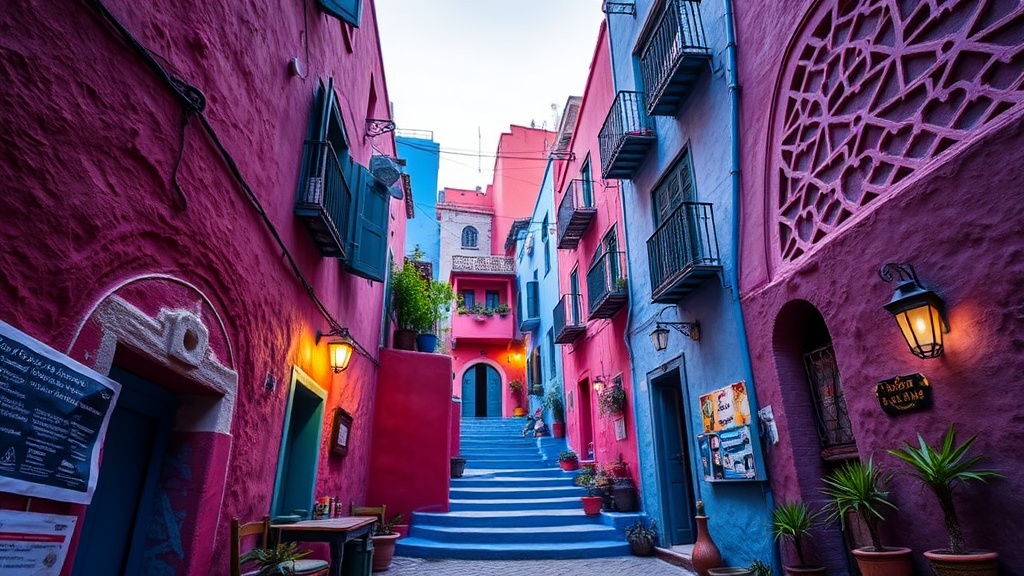
Navigating the Colorful Labyrinths of Chefchaouen

This guide provides the logistical framework, cost breakdowns, and practical transit strategies required to visit Chefchaouen, Morocco. You will find specific advice on timing, budget allocation, and how to manage the physical demands of the Rif Mountains to ensure your time spent in the blue city delivers a high return on your travel investment.
How Much Does a Trip to Chefchaouen Cost?
A mid-range trip to Chefchaouen typically costs between $60 and $110 USD per day, excluding international airfare. This budget accounts for a comfortable riad, local dining, and private transport if you aren't using public buses.
When I look at travel through the lens of ROI, I don't just look at the price tag—I look at the value-to-hassle ratio. If you spend $200 a night on a luxury villa but spend the whole time fighting the narrow, steep stairs of the Medina, you've wasted your money. In Chefchaouen, the "luxury" is in the location and the view, not necessarily the marble floors.
Here is a breakdown of typical daily expenses for a professional traveler:
| Expense Category | Budget (USD) | Mid-Range (USD) | High-End (USD) |
|---|---|---|---|
| Daily Accommodation | $25 - $40 | $70 - $130 | $250+ |
| Daily Meals & Coffee | $15 - $25 | $40 - $60 | $100+ |
| Local Transport | $5 - $10 | $20 - $40 | $100+ |
If you are staying in a traditional riad, you'll likely find much better value than a modern hotel on the outskirts. The riads are the heart of the city's charm. Plus, you're closer to the best food.
When is the Best Time to Visit Chefchaouen?
The optimal window for visiting is between April and June or September and October to avoid both the extreme summer heat and the winter chill. These shoulder seasons offer the most predictable weather for walking the steep, uneven terrain of the Medina.
I've seen people try to "optimize" their trip by going in August to save a few bucks on flights, but that's a bad move. The heat in the Rif Mountains can be punishing, and the crowds in the narrow alleys become claustrophobic when the temperature spikes. You want those clear, temperate mornings for photography and exploring.
The weather in Morocco can be temperamental. One day it's a bright, sun-drenched morning—perfect for a hike to the Spanish Mosque—and the next it's a misty, overcast afternoon. I recommend packing layers. A lightweight Patagonia jacket or a versatile linen shirt will serve you better than a single heavy coat.
Check the official Wikipedia entry for Chefchaouen to understand the regional geography, as the mountain climate significantly impacts your packing list. You aren't just packing for a city; you're packing for a mountain town.
How Do You Get to Chefchaouen from Tangier or Fes?
The most efficient way to reach Chefchaouen is via a CTM bus or a private driver. CTM (Compagnie de Transport au Maroc) is the gold standard for reliable, scheduled bus travel in the region.
If you're coming from Tangier, the bus ride is roughly 2.5 to 3 hours. If you're coming from Fes, expect closer to 4 or 5 hours. I always advise my clients to book CTM tickets in advance if they are traveling during peak season. It’s a small detail, but it prevents you from being stuck at a station for hours waiting for the next departure.
Here’s the reality of the transport options:
- CTM Bus: Reliable, air-conditioned, and cost-effective. It’s the best way to manage your time.
- Grand Taxis: Faster and more flexible, but the pricing is often non-negotiable and can feel like a "tourist tax" if you don't know the standard rate.
- Private Driver: This is the "premium" option. If you have a lot of luggage or are traveling with a group, the ROI on a private driver is high because it eliminates the stress of navigating bus schedules.
Don't bother trying to navigate the local bus-to-taxi transitions with a heavy backpack. It's a recipe for a headache. If your budget allows, hire a driver for the leg from Fes. The time you save is worth the extra $40.
Is the Medina Easy to Navigate?
No, the Medina is a labyrinthine network of stairs, alleys, and dead ends that requires constant orientation. It is not a place where you can rely on a standard GPS signal, as the thick walls and narrow passages often block signals.
The streets are essentially a vertical maze. You will walk uphill. You will walk downhill. You will likely get lost at least twice—and honestly, that's part of the experience. But if you're someone who needs a strict itinerary, this can be frustrating.
To mitigate the "lost" factor, I suggest these three tactics:
- Download offline maps: Google Maps works sporadically, but having an offline version of the area on your phone is a safety net.
- Use landmarks: The blue walls are beautiful, but they all look the same after two hours. Look for specific gates or shops to orient yourself.
- The "High Ground" Strategy: Always make a point to walk up to the Spanish Mosque at sunset. It gives you a bird's-eye view of the entire town, which helps you build a mental map of the layout.
One thing to note: the terrain is hard on your feet. Do not bring those stylish, thin-soled loafers you intended to wear for dinner. You need shoes with actual grip and support. The cobblestones can be slippery, especially if it rained recently.
If you've enjoyed the structural breakdown of travel guides for other destinations, you might find my guide on Hidden Gems of Portugal helpful for planning your next European leg. The level of detail in planning a multi-stop itinerary is much the same.
The blue walls of Chefchaouen are iconic for a reason, but the beauty is secondary to the logistics. If you manage your transit, your budget, and your physical stamina, the city becomes a place of genuine relaxation rather than a logistical struggle. Plan for the stairs, budget for the transport, and don't fight the labyrinth—just walk through it.