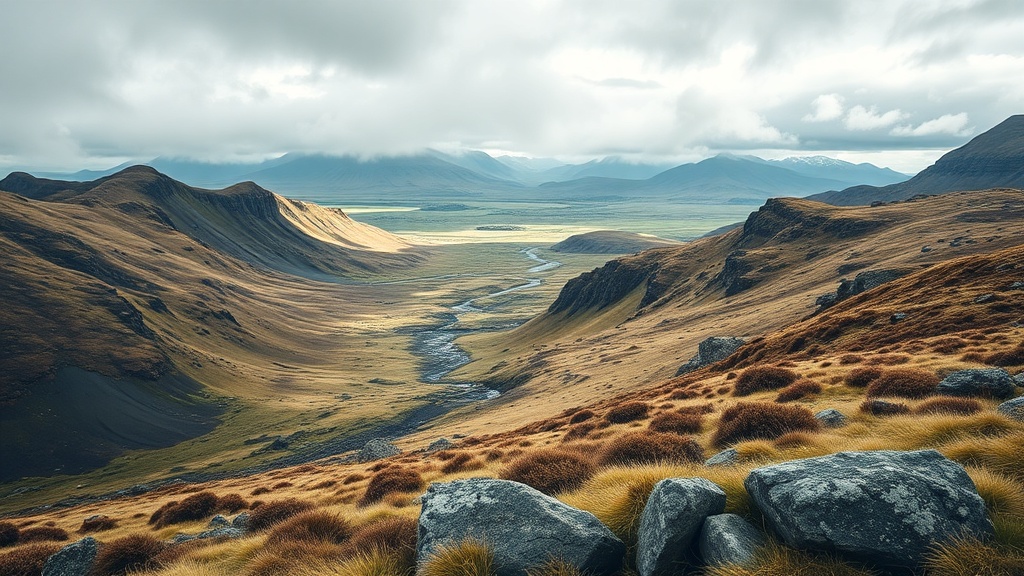
Why You Should Visit the Icelandic Highlands in Summer

What You Will Learn in This Guide
This post provides a strategic breakdown of why the Icelandic Highlands (the interior highlands) are a high-value destination during the summer months. You will learn the logistical requirements for accessing this region, a cost-benefit analysis of the necessary vehicle types, specific high-yield destinations like Landmannalaugar and Askja, and the precise gear requirements to ensure your trip delivers a high return on investment (ROI) regarding comfort and safety.
The Strategic Advantage of Summer in the Highlands
For most travelers to Iceland, the itinerary is confined to the Ring Road. While the coastal areas are accessible, the true topographical diversity of the island is concentrated in the interior highlands. Visiting in the summer (specifically July and August) is not a matter of preference; it is a logistical necessity. During this window, the F-roads—the unpaved mountain tracks that serve as the only arteries into the interior—are officially opened and cleared of heavy snow. Attempting this region outside of this window is a failed project due to impassable terrain and extreme weather risks.
The primary value proposition of the Highlands is the isolation. While the Golden Circle and South Coast experience high tourist density, the Highlands offer a significant reduction in human interference. This allows for a level of mental decompression that is difficult to achieve in more populated European destinations. If your goal is true "unplugging," the Highlands provide the necessary spatial buffer.
Vehicle Logistics: The 4x4 Requirement
The most common mistake travelers make is underestimating the mechanical requirements of the Highlands. You cannot navigate the interior in a standard sedan or a basic crossover. The terrain consists of deep river crossings, loose volcanic ash, and steep gradients. To avoid a total loss of productivity (and potentially a very expensive recovery fee), you must rent a true 4x4 vehicle.
The Tiered Vehicle Breakdown
- Compact 4x4 (e.g., Dacia Duster): This is the budget-conscious option. While it can handle many F-roads, it is less capable in deep river crossings. If you are strictly sticking to well-maintained tracks, this provides a better ROI for shorter trips.
- Full-Size SUV (e.g., Toyota Land Cruiser): This is the gold standard for the Highlands. The higher ground clearance and robust suspension are essential if you plan to navigate the more technical routes toward Askja or the interior of Þórsmörk.
- Modified Super Jeep: These are specialized vehicles designed for extreme terrain. While expensive, they offer the highest level of reliability in unpredictable conditions.
Pro Tip: Always check your insurance policy specifically for "sand and ash protection" and "river crossing coverage." Most standard rental insurance excludes damage caused by water ingress during river crossings. In the Highlands, a river crossing is a standard part of the drive, not an "accident," so you must plan for this contingency.
High-Yield Destinations in the Interior
To maximize your time, focus your itinerary on these three distinct regions, each offering a different topographical experience.
Landmannalaugar: The Rhyolite Expert
Landmannalaugar is famous for its rhyolite mountains, which display a spectrum of colors from ochre to teal. This area is ideal for those who want high-impact visual rewards with moderate physical effort. The hiking trails are well-marked, and the natural hot springs provide an excellent way to recover from a day of movement. From a planning perspective, book your accommodation at the Highland Center Landmannalaugar months in advance, as capacity is extremely limited.
Askja: The Volcanic Frontier
For a more rugged, high-stakes experience, head to the Askja caldera. This area is significantly more remote and requires a highly capable vehicle and significant fuel reserves. The centerpiece is the Víti crater, a caldera filled with milky blue water. This is a high-reward destination for those who want to see the raw, unedited power of Icelandic volcanism. Note that the road to Askja is notoriously difficult; do not attempt this unless you have a high-clearance vehicle and a proven track record of off-road driving.
Þórsmörk: The Valley of Thor
Located between two glaciers, Þórsmörk offers a lush, green contrast to the barren volcanic deserts found elsewhere in the Highlands. The hiking is world-class, featuring steep ascents and dramatic views of the surrounding glaciers. This area is a strategic middle ground—it is more accessible than Askja but offers more ruggedness than the coastal towns. It is an excellent location for testing your gear before attempting more extreme interior routes. If you are preparing for this level of terrain, review my guide on packing for a high altitude trek to ensure your layering system is optimized for rapid temperature shifts.
The Gear Audit: Essential Equipment
In the Highlands, your comfort is directly proportional to the quality of your technical gear. The weather can shift from bright sunlight to a horizontal rainstorm in under ten minutes. Do not rely on "lifestyle" clothing; you need technical specifications.
- Footwear: You need waterproof, high-ankle hiking boots with a stiff sole (Vibram or similar). The terrain is uneven and often wet; low-cut sneakers or light hikers will result in soaked feet and potential ankle injuries.
- The Layering System: Follow the three-layer rule: a moisture-wicking base layer (merino wool is the industry standard), an insulating mid-layer (fleece or down), and a waterproof/windproof outer shell (Gore-Tex or equivalent).
- Navigation: Do not rely solely on your smartphone. GPS signal can be unreliable in deep valleys, and phone batteries drain rapidly in cold environments. Carry a dedicated GPS unit and a physical topographic map of the region.
- Hydration and Nutrition: While much of the water in Iceland is safe to drink from streams, the physical exertion in the Highlands requires consistent hydration. Pack high-calorie, shelf-stable snacks to maintain energy levels during long drives between stops.
Cost-Benefit Analysis: Is the Highlands Worth the Extra Effort?
When planning a trip to Iceland, you must decide whether to spend your time on the coast or in the interior. Here is a quick breakdown of the trade-offs:
| Feature | Coastal Iceland (Ring Road) | Icelandic Highlands |
|---|---|---|
| Accessibility | High (Paved roads, easy driving) | Low (F-roads, river crossings) |
| Crowd Density | High (Significant tourist traffic) | Low (Extreme isolation) |
| Vehicle Cost | Standard Rental/SUV | Premium 4x4/Super Jeep |
| Visual Impact | Waterfalls and Black Sand Beaches | Volcanic Deserts and Rhyolite Mountains |
If your priority is ease of movement and luxury amenities, stay on the coast. If your priority is a sense of discovery, unique geological formations, and a complete lack of crowds, the Highlands offer a much higher ROI on your travel time. The "cost" of the Highlands is higher in terms of both money (vehicle rental) and mental energy (navigation and driving skill), but the "dividend" is a landscape that feels truly untouched.
Final Planning Checklist
- Confirm F-Road Status: Check the official road.is website daily. F-roads can close even in summer if weather conditions deteriorate.
- Fuel Strategy: Fuel stations are non-existent in the deep interior. Always top off your tank when you see a station, even if you are at half full.
- Insurance Verification: Read the fine print on your vehicle rental. Ensure you are not liable for gravel damage or water damage.
- Connectivity: Download offline maps for the entire region and ensure you have a way to communicate (satellite messenger or reliable GPS) if you are traveling solo or in a small group.