Why You Should Spend a Night in a Desert Camp in Wadi Rum

Sleeping Under a Sea of Stars
Traditional Bedouin Hospitality and Food
The Stunning Red Sandstone Landscapes
Are you debating whether the logistical effort of staying overnight in the Jordanian desert is worth the premium price tag, or if a simple day trip from Aqaba or Petra is sufficient? This guide evaluates the ROI of spending a night in a Wadi Rum desert camp by analyzing the astronomical views, the quality of local hospitality, and the logistical realities of desert living. For the high-achieving professional, time is the most valuable commodity; this breakdown helps you decide if the "Martian" landscape justifies the overnight commitment.
The Value Proposition of the Overnight Stay
Most travelers treat Wadi Rum as a stopover—a three-hour 4x4 tour before heading back to a hotel in Petra or Aqaba. While this is efficient for a tight itinerary, it results in missing the two most significant assets of the region: the celestial transition and the cultural immersion. From a strategic planning perspective, an overnight stay transforms a transit point into a destination experience.
1. The Unrivaled Stargazing ROI
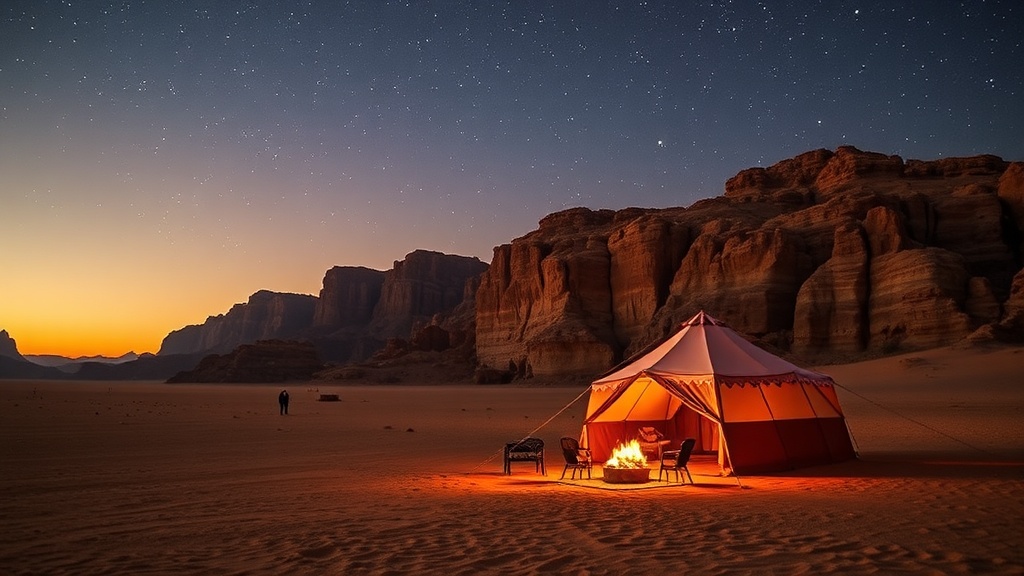
Wadi Rum is one of the few places on earth where light pollution is virtually non-existent. If you leave by 4:00 PM to head back to a city, you miss the primary "product" of the desert: the night sky. The visibility of the Milky Way in the desert is a high-value experience that cannot be replicated in a hotel room with a balcony. Whether you are staying in a traditional Bedouin tent or a high-end Martian dome, the clarity of the stars provides a level of psychological decompression that is hard to quantify but highly impactful for professionals dealing with high-stress environments.
2. The Transition from Day to Night
The desert landscape changes color dramatically during the "Golden Hour" and the subsequent twilight. The red sands of the Valleys of the Moon shift from ochre to deep crimson and eventually a violet hue. By staying overnight, you witness the full spectrum of the desert' خلال the most photogenic hours of the day. This isn't just about aesthetics; it is about experiencing the natural rhythm of the environment without the rush of a tour group departure deadline.
3. Authentic Bedouin Hospitality and Culinary Depth
A significant part of the cost of a desert camp goes toward the traditional meal known as Zarb. This is not just a standard dinner; it is a slow-cooked feast where meat and vegetables are placed in a pit in the sand, covered with hot coals, and left to cook for hours. Eating Zarb under the stars is a fundamental part of the Jordanian cultural experience. If you only do a day trip, you are likely relegated to a quick, standard lunch, missing out on this specific culinary ritual.
Evaluating Your Accommodation Options: Tents vs. Domes
When planning your budget, you will encounter two distinct tiers of accommodation. As a strategist, I recommend choosing based on your tolerance for "roughing it" versus your desire for a controlled environment.
Traditional Bedouin Tents
These are the standard, functional options. They are typically made of heavy fabric and offer a basic mattress, a small rug, and perhaps a single lantern.
- Pros: Most cost-effective; provides the most authentic "analog" experience; minimal distractions.
- Cons: Limited privacy; basic amenities; can be quite cold at night even in shoulder seasons.
- Best for: The traveler who wants to disconnect completely and doesn't mind the lack of high-end infrastructure.
Luxury Martian Domes
These are the high-end, "Instagram-famous" structures featuring large transparent panels that allow you to view the stars from your bed.
- Pros: Climate control (AC/Heating); en-suite bathrooms; high-speed Wi-Fi (though often spotty); unparalleled views.
- Cons: Significant price premium; can feel a bit "manufactured" compared to traditional setups.
- Best for: The professional who wants the aesthetic of the desert without sacrificing the comfort of a luxury hotel.
Logistical Realities and Practical Advice
To ensure your time in Wadi Rum is an asset rather than a logistical headache, you must account for the specific constraints of the desert environment.
Connectivity and Communication
Do not rely on seamless connectivity. While luxury camps may offer Wi-Fi, the signal strength is often inconsistent due to the surrounding rock formations and sand dunes. If you need to be reachable for an emergency, I strongly suggest buying a local SIM card before arriving in Jordan. A local provider like Zain or Orange will offer much better coverage in the periphery of the desert than international roaming. However, treat this as a "digital detox" period; the lack of signal is part of the value proposition.
Packing List: The Essentials
The desert is a land of extremes. The temperature differential between midday and midnight is massive.
- Layered Clothing: Even in summer, the temperature drops significantly once the sun goes down. Bring a high-quality fleece or a light down jacket.
- High-SPF Sunscreen and Polarized Sunglasses: The glare off the red sand is intense and can cause eye fatigue quickly.
- A High-Quality Headlamp: Walking to the communal bathroom or navigating your tent in total darkness requires more than just a phone flashlight.
- Hydration Salts/Electrolytes: The dry air can dehydrate you faster than you realize, even if you feel you are drinking enough water.
Timing Your Visit
The "when" is just as important as the "where."
- Spring (March–May) and Autumn (September–November): These are the optimal windows. The temperatures are manageable during the day and cool but not freezing at night.
- Summer (June–August): Be prepared for extreme heat. If you choose to stay in a dome, ensure it has high-quality air conditioning.
- Winter (December–February): It can get brutally cold. If you are not an experienced camper, avoid staying in a basic tent during these months.
The Verdict: Is It Worth It?
From a purely logistical standpoint, staying in Wadi Rum adds a layer of complexity to your Jordan itinerary. You have to coordinate transport, manage different packing requirements, and accept a lower level of predictable service than you would find in Amman or Aqaba.
However, if your goal is to experience the Middle East as more than just a series of snapshots, the overnight stay is non-negotiable. The ROI of seeing the Milky Way above the red dunes and sharing a Zarb meal with your Bedouin hosts far outweighs the cost of a standard hotel room. For the professional looking to truly reset and gain a new perspective, the desert provides the silence and scale that a city cannot offer.
"The desert is not just a place to see; it is a place to observe the passage of time through light and shadow."
If you are planning a larger regional trip, consider how these slower, more immersive experiences fit into your broader itinerary. For example, if you are interested in the slow movement of travel, you might also enjoy reading about why you should take a slow train journey through Scandinavia to understand how pacing affects your travel satisfaction.